Tips From a Pediatric PT
In-depth articles, guides, and resources to help you understand your child's development, written by a licensed pediatric physical therapist.
Featured articles
Why Tummy Time Matters More Than You Think
Tummy time isn't just about preventing flat head syndrome — it's the foundation for nearly every gross motor milestone your baby will hit in their first year.
Coming soonThe Truth About Baby Walkers
Baby walkers are one of the most popular baby products on the market — and one of the most concerning from a developmental standpoint. Here's what the research says.
Read articleWhen to See a Pediatric PT
Not sure if your child needs a physical therapy evaluation? Here are the signs I look for as a PT — and why early intervention makes such a big difference.
Coming soonDIY Sensory Space on a Budget
You don't need a dedicated room or expensive equipment to create a sensory-supportive space for your child. Here's how to build one with what you already have.
Read articleFree resources
More resources coming soon.
Motor Milestone Checklist
A PT-created checklist of key motor milestones from birth through 24 months — with PT tips for each stage. Use this as a general guide, not a strict timeline. Every baby develops at their own pace.
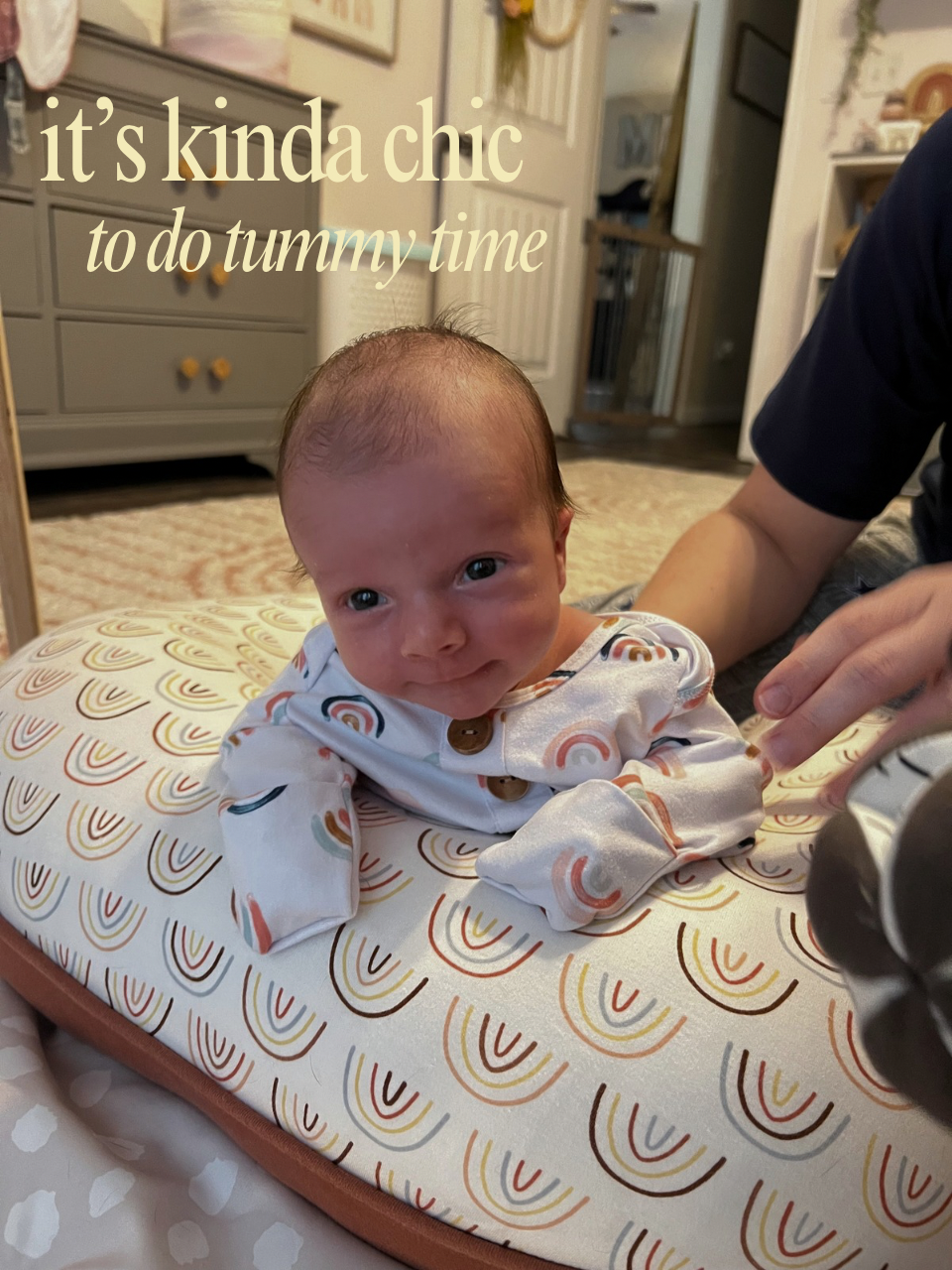
Tummy Time & Rolling
- Lifts head briefly during tummy time (0–2 months)
- Holds head at 45° during tummy time (2–3 months)
- Pushes up on forearms, head at 90° (3–4 months)
- Rolls from tummy to back (3–5 months)
- Rolls from back to tummy (4–6 months)
- Tolerates tummy time for several minutes without fussing
PT Tip
Aim for 30+ minutes of tummy time spread throughout the day. Start right from birth — even a few seconds counts!
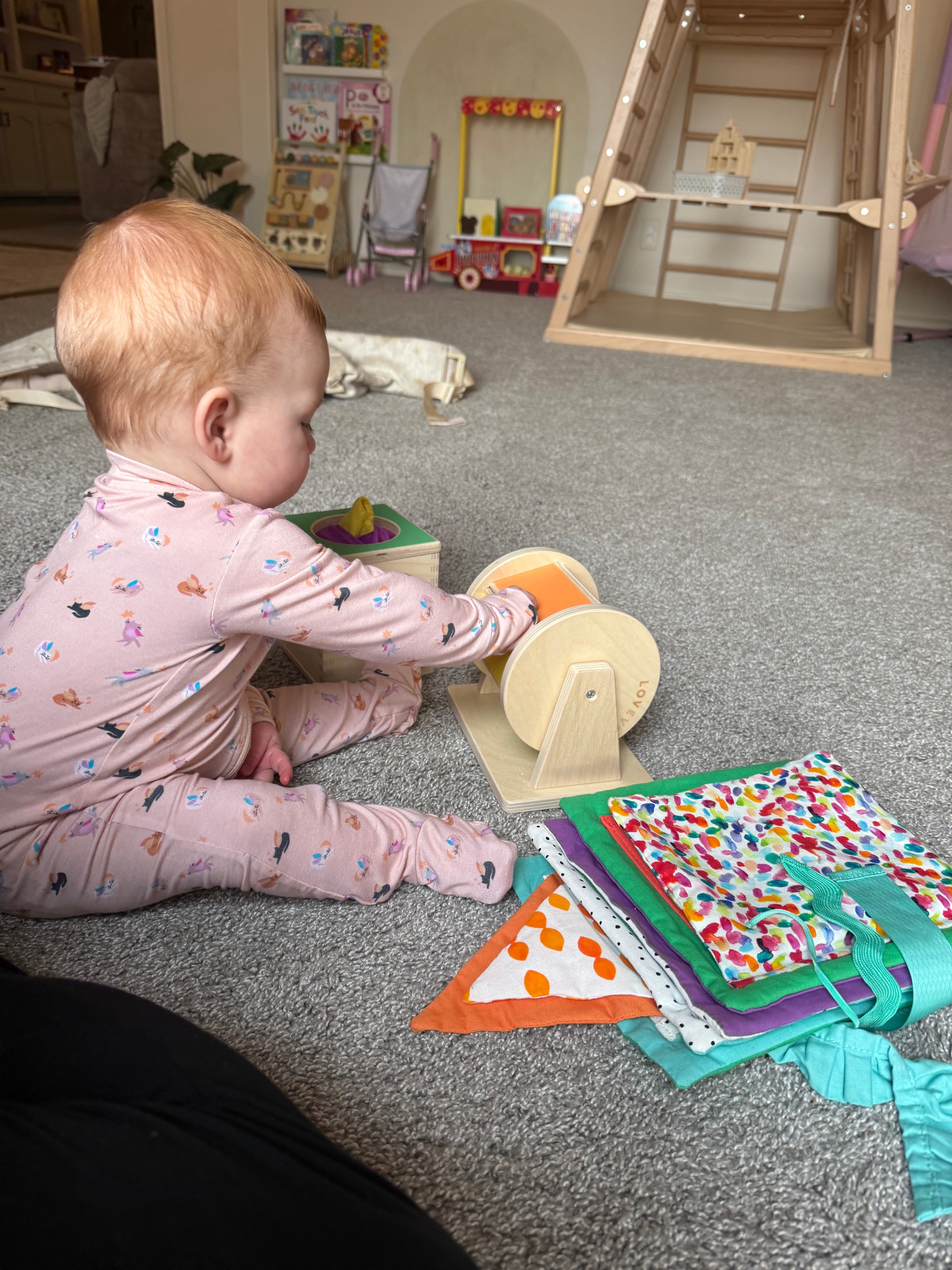
Pull to Sit & Sitting
- Minimal head lag when pulled to sit (3–4 months)
- Holds head steady when held upright (3–4 months)
- Sits with support (4–5 months)
- Sits in tripod position (brief, hands on floor) (5–6 months)
- Sits independently for 30+ seconds (6–7 months)
- Sits and reaches without falling (7–8 months)
PT Tip
Avoid propping in seats too early — floor time builds the core strength needed for independent sitting.
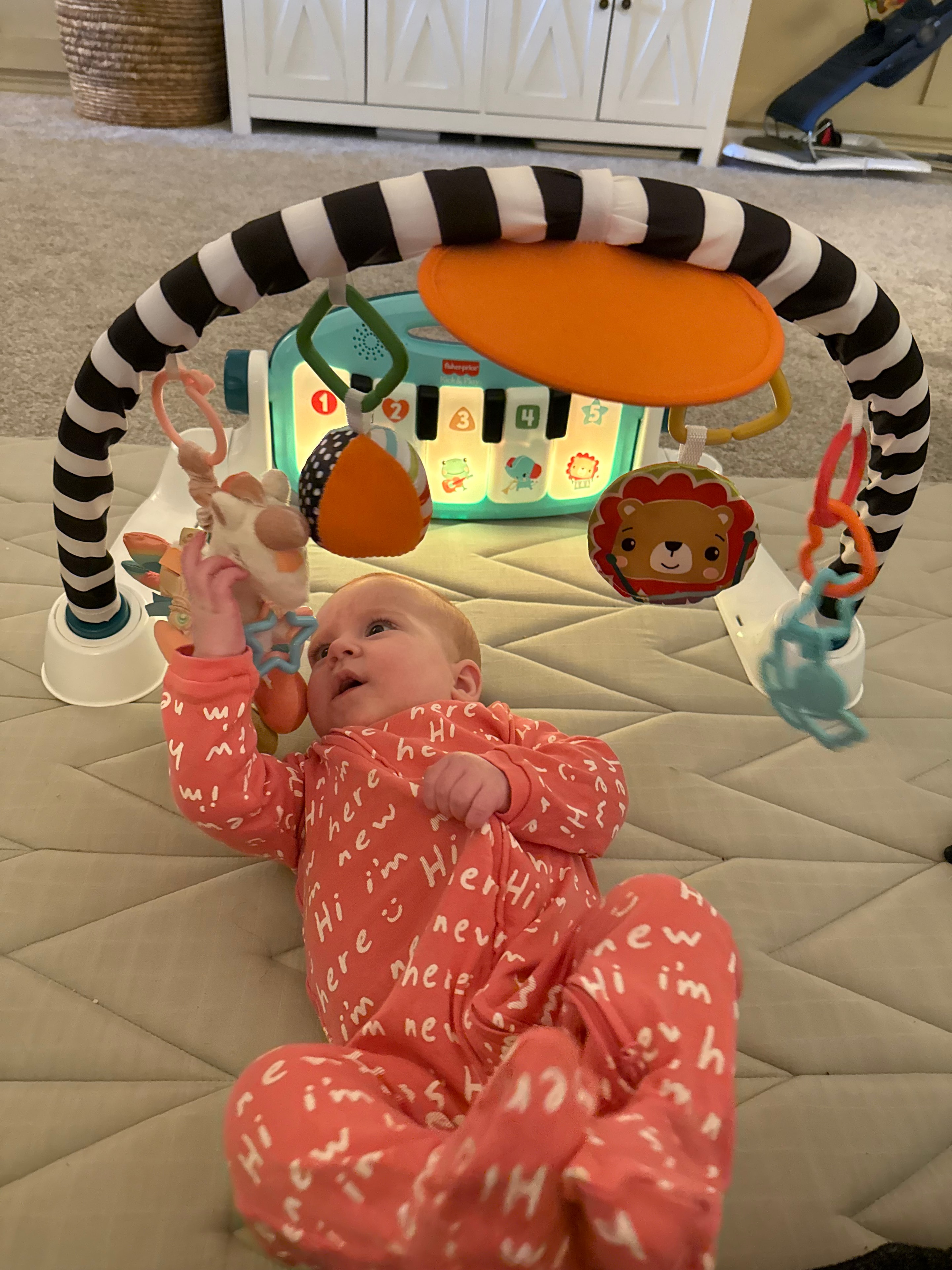
Hand Skills (Early)
- Hands open and close (0–2 months)
- Brings hands to midline / mouth (2–3 months)
- Bats at objects (3–4 months)
- Reaches for and grasps toys (4–5 months)
- Transfers objects hand to hand (5–6 months)
- Bangs objects together (6–8 months)
PT Tip
Offer toys of different textures and sizes to encourage exploration — this builds both hand strength and sensory awareness.
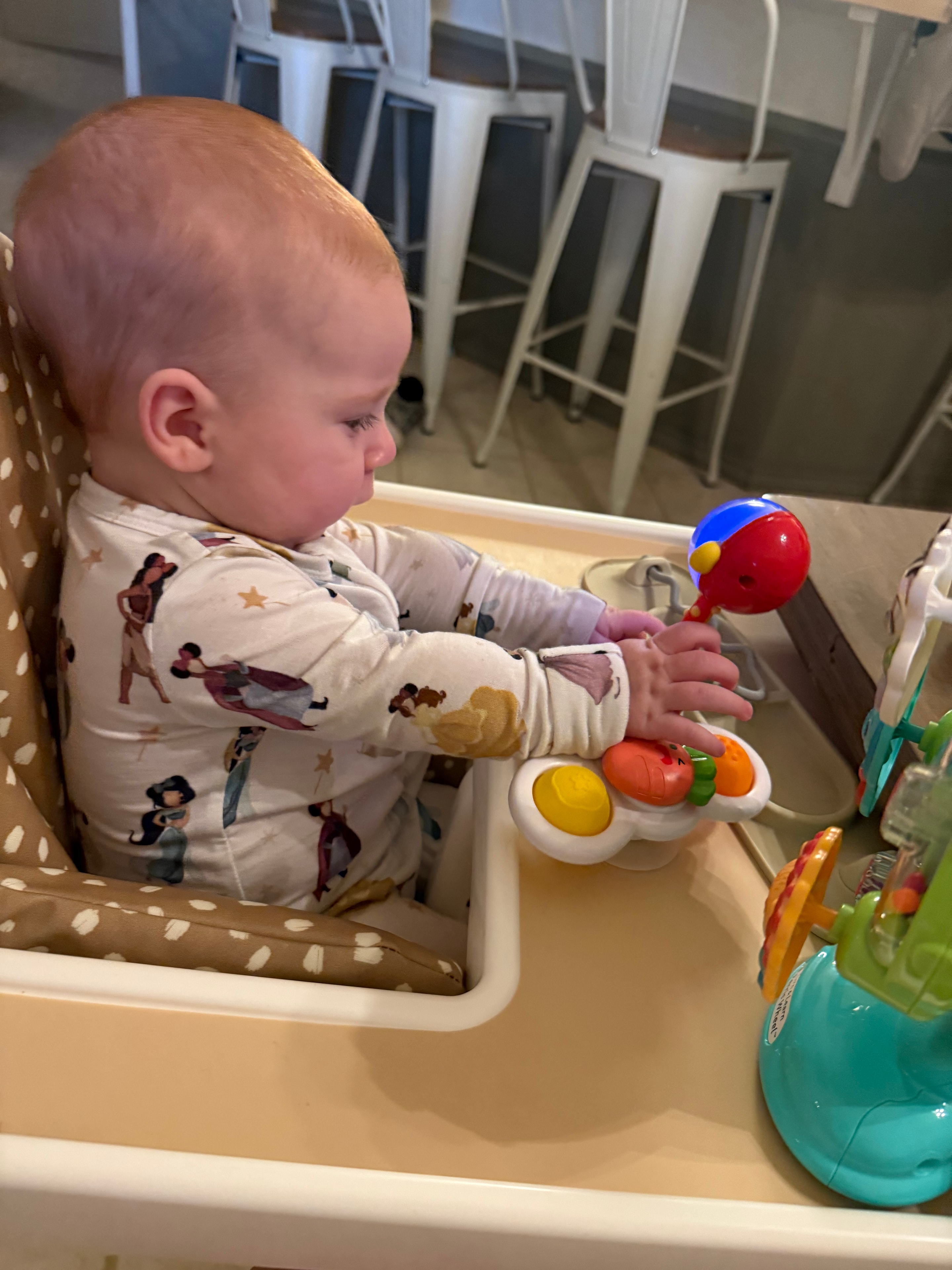
Grasping
- Palmar grasp — whole hand around object (3–5 months)
- Radial palmar grasp — thumb side of hand (5–6 months)
- Raking grasp — fingers rake objects toward palm (6–7 months)
- Inferior pincer — thumb and side of index finger (7–9 months)
- Neat pincer grasp — thumb and fingertip (9–12 months)
- Releases objects intentionally (9–10 months)
PT Tip
Small, safe finger foods are great for practicing pincer grasp — let them pick up soft puffs or small pieces of banana.
Crawling
- Gets into hands-and-knees position (6–7 months)
- Rocks forward and back on hands and knees (7–8 months)
- Army crawls / commando crawls (7–9 months)
- Reciprocal hands-and-knees crawling (8–10 months)
- Crawls over obstacles and up stairs (9–12 months)
- Transitions in and out of sitting smoothly (8–10 months)
PT Tip
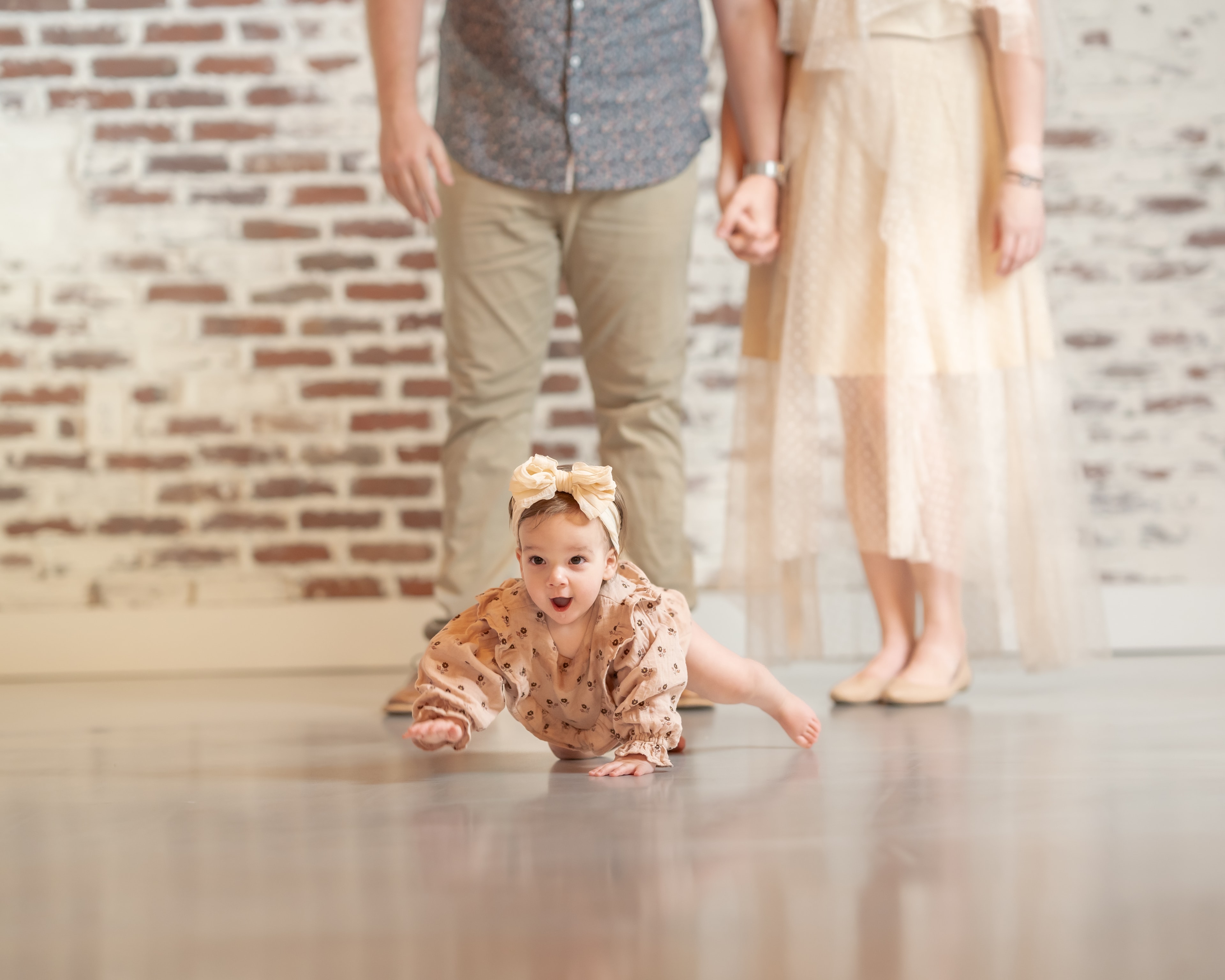
Crawling is not a milestone to skip! It builds shoulder stability, core strength, and cross-body coordination that supports reading and writing later on.
Standing & Walking
- Pulls to stand at furniture (8–10 months)
- Cruises along furniture (9–11 months)
- Stands briefly without support (10–12 months)
- Takes first independent steps (10–13 months)
- Walks independently with wide base (12–14 months)
- Walks with narrower base, more upright posture (14–18 months)
PT Tip
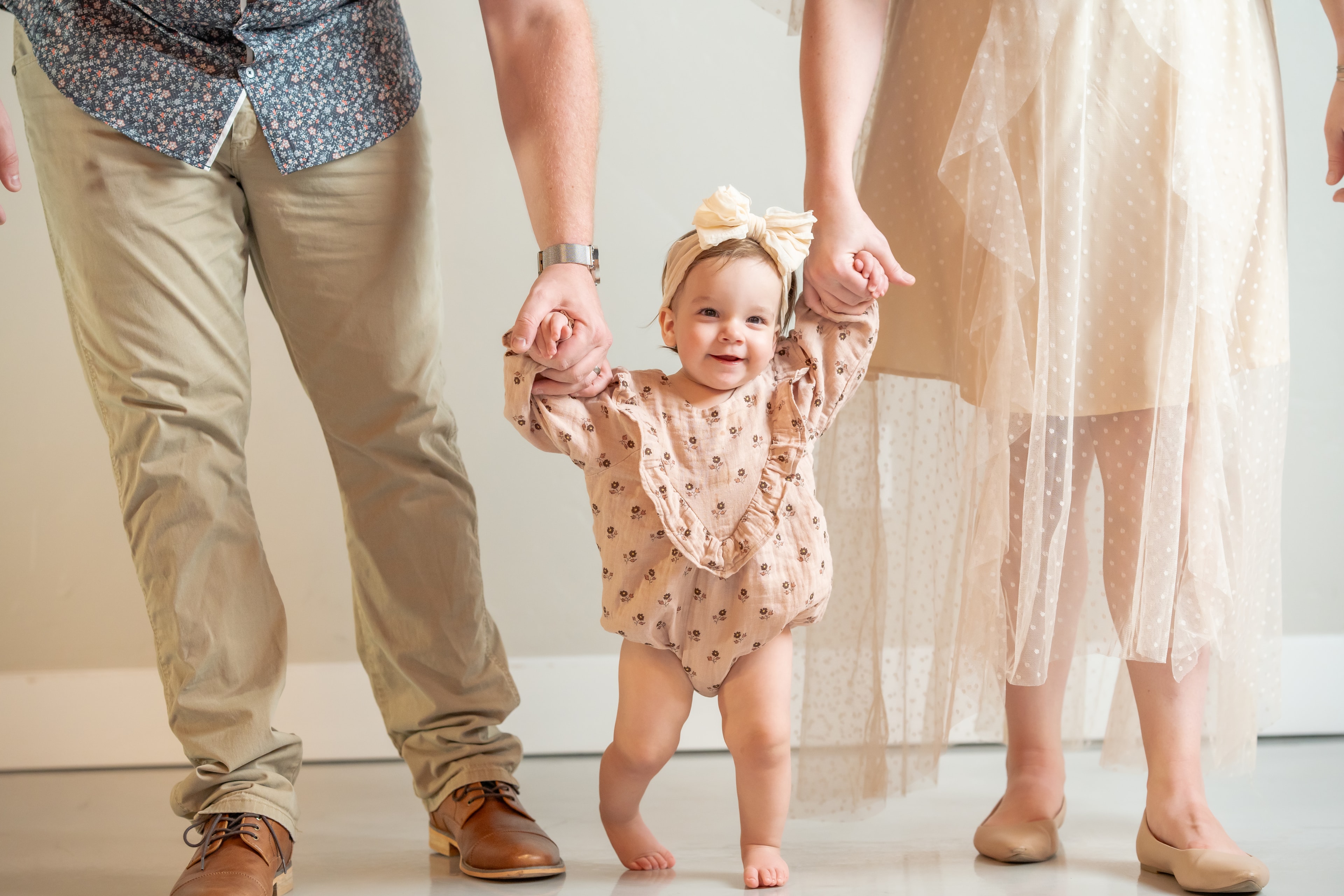
Bare feet or soft-soled shoes are best for new walkers — they need to feel the ground to develop balance and foot strength.
Fine Motor & Self-Feeding
- Finger feeds soft foods (8–10 months)
- Holds bottle or cup with both hands (6–9 months)
- Drinks from open cup with help (9–12 months)
- Scoops with spoon, lots of spilling (12–15 months)
- Brings spoon to mouth with some success (15–18 months)
- Uses spoon with minimal spilling (18–24 months)
PT Tip
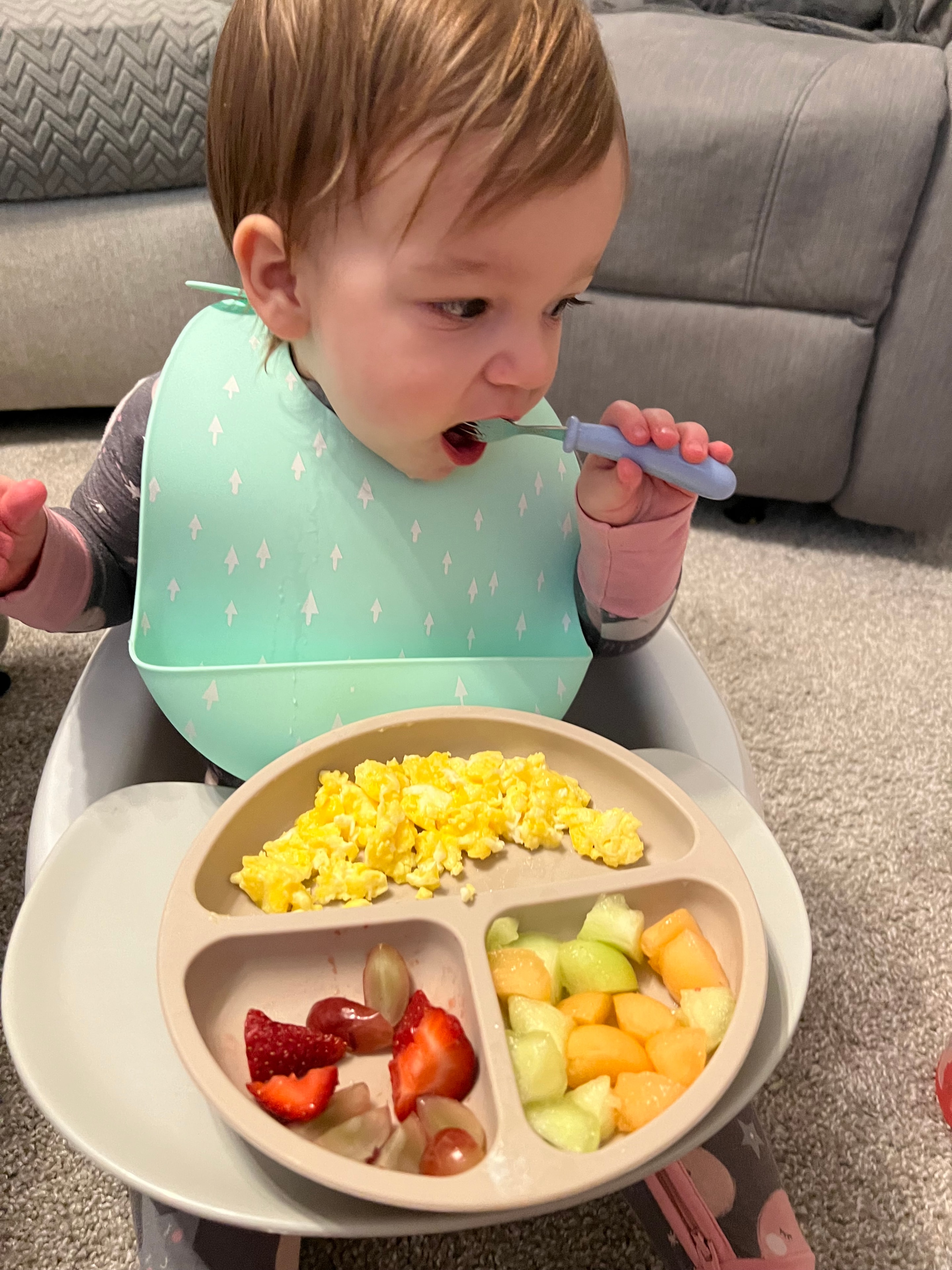
Messy eating is learning! Let them explore — the sensory experience of touching food builds tolerance and independence.
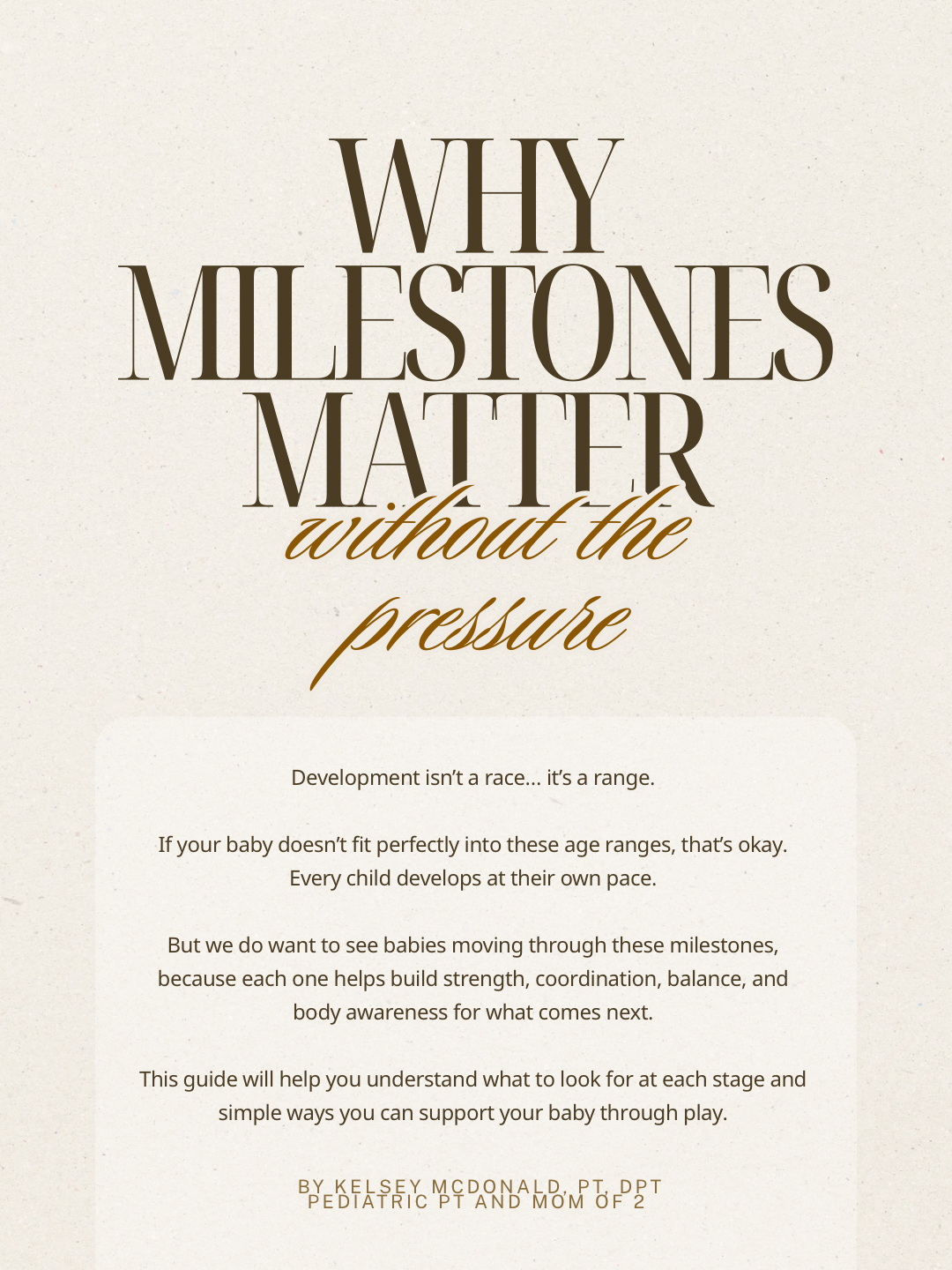
Why Milestones Matter Without the Pressure
A PT-created guide to understanding what to look for at each stage and simple ways to support your baby through play.
Page 1 of 7
This site is intended for educational purposes only and is not a substitute for individualized medical advice, evaluation, or physical therapy treatment.